

In 2016, I made a life-changing decision: I took a sabbatical, put my family in a small RV, and we drove all the way to Costa Rica.
Upon my return in 2017, I officially quit my job as a private banker at National Bank and started working full-time on my baby: Dividend Stocks Rock. I also decided to manage my pension account held at the National Bank. I’ve built and managed this portfolio publicly since 2017 to create and track a real-life case study.
In August 2017, I received $108,760.02 in a locked retirement account. Locked means I can’t add capital to the account, and growth is only generated through capital gains and dividends. I don’t report this portfolio’s results to brag about my returns or to suggest you follow my lead. My purpose has been solely to share with our members how I manage my portfolio with all the good and the bad that inevitably takes place each month. I hope you have learned and will continue to learn from my experiences managing this portfolio.
Roasting a Listener’s Portfolio
This month I tried something different on the podcast. A listener sent me one of his portfolios and asked me to roast it. We’ll call him Caleb, which isn’t his real name; it’s one of my kids’ names.
But first, the results!
Performance in Review
Let’s start with the numbers as of October 8th, 2026 (before the bell):
Original amount invested in September 2017 (no additional capital added): $108,760.02.
- Current portfolio value: $340,113.76
- Dividends paid: $5,552.21 (TTM)
- Average yield: 1.63%
- 2025 performance: +7.34%
- VFV.TO= +12.18%, XIU.TO = +28.88%
- Dividend growth: +1.5%
Total return since inception (Sep 2017- Sep 2026): +212.72%
Annualized return (108 months): 13.51%
Benchmark: 14.995%
Out(under)performance: -1.485%
Vanguard S&P 500 Index ETF (VFV.TO) annualized return (since Sept 2017): 16.89% (total return 307.40%)
iShares S&P/TSX 60 ETF (XIU.TO) annualized return (since Sept 2017): 13.1% (total return 202.90%)
Roasting a Listener’s Portfolio
This month I tried something different on the podcast. A listener sent me one of his portfolios and asked me to roast it. We’ll call him Caleb, which isn’t his real name; it’s one of my kids’ names.
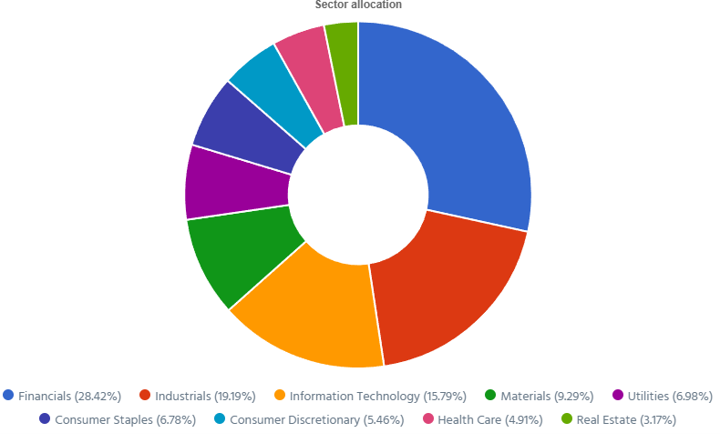
He holds 29 stocks with roughly equal weight, so I built a mock $100,000 portfolio and reviewed it the way I review my own money. I don’t know Caleb’s full situation, so this isn’t advice, just a look through the DSR lens. At the big-picture level, nothing jumped out as wrong. There are four core sectors: financials at 21%, then consumer discretionary, technology and industrials at about 17% each. Consumer staples, healthcare and one materials name complete it. The forward yield is about 1.75%, and only Pepsi and BAM yield more than 4%. It’s a low-yield, high-growth portfolio, very close to how I invest.
Most of Caleb’s questions were about overlap.
- Lowe’s and Home Depot are direct competitors. If home renovation slows down, both will react the same way, so about 7% of the portfolio is tied to one risk. That’s not ideal, but it’s not the end of the world either; what matters is whether you’re comfortable with that exposure.
- Owning both Visa and Mastercard means owning both halves of a duopoly. It’s not optimal, but it’s not a big overlap (and I own Visa, so I’m a bit biased).
- Industrials getting close to 20% doesn’t worry me: a railroad, an engineering firm and a waste company have almost nothing in common. Sector labels are fuzzy anyway. I put Stella Jones in materials, Caleb puts it in industrials, and both make sense. The point of watching sector weights isn’t the label. It’s knowing what you own and why you own it, as Peter Lynch said.
- The one name I’d keep on my radar is UnitedHealth. It’s been a dog for about two years, so patience is required.
Honestly, I could invest in most of these companies.
Microsoft, Apple, Broadcom and Visa are already in my portfolio, and I used to own Texas Instruments before selling it to buy Broadcom.
But liking the picks doesn’t mean they’ll do well next year.
Stella Jones is a good reminder: the numbers are solid, and it has still been lagging for a while. Picking companies that fit your strategy is the first step. Being patient is the second. Most importantly, you should sleep well at night.
If you like how your portfolio is built, you have the perfect portfolio for you.
Watch the full roast below and tell me in the YouTube comments what you would change.
Smith Manoeuvre Update
The portfolio shows 13 companies spread across 7 sectors. My goal is to build a portfolio of thriving companies with a solid dividend triangle (i.e., positive revenue, EPS, and dividend growth trends). The current portfolio yield is 1.78%, with a 5-year dividend growth CAGR of 11.69%.
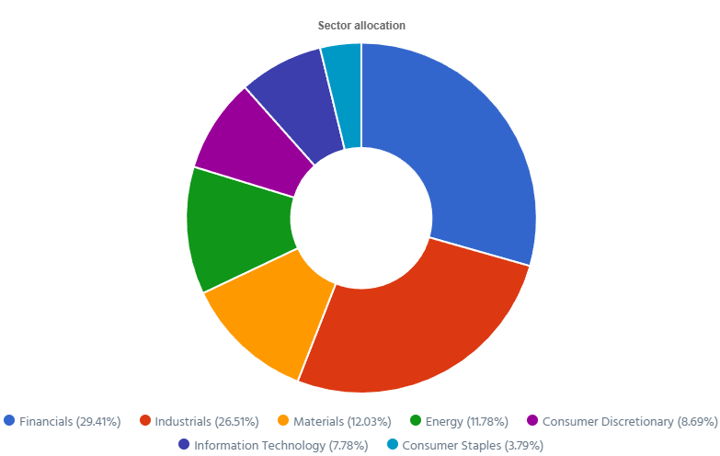
- The portfolio value is now at $41,829.57.
- The portfolio debt is at $32,000.
- Interest paid since April 2022: $2,885.19
- Monthly contribution is set at $1,000/month.
- The annual income is $742.75, and the projected income is $829.95.
- To report my Smith Manoeuvre, I export the Excel data from my DSR PRO dashboard.
The portfolio is on its way to generating an extra $1,000 per year in dividends. I’m not there yet, but it will happen in the first months of 2027! By then, my portfolio will be close to $50,000! It will be exciting to see a 13th injection of $1,000 boost the portfolio further!
Smith Manoeuvre Portfolio Summary
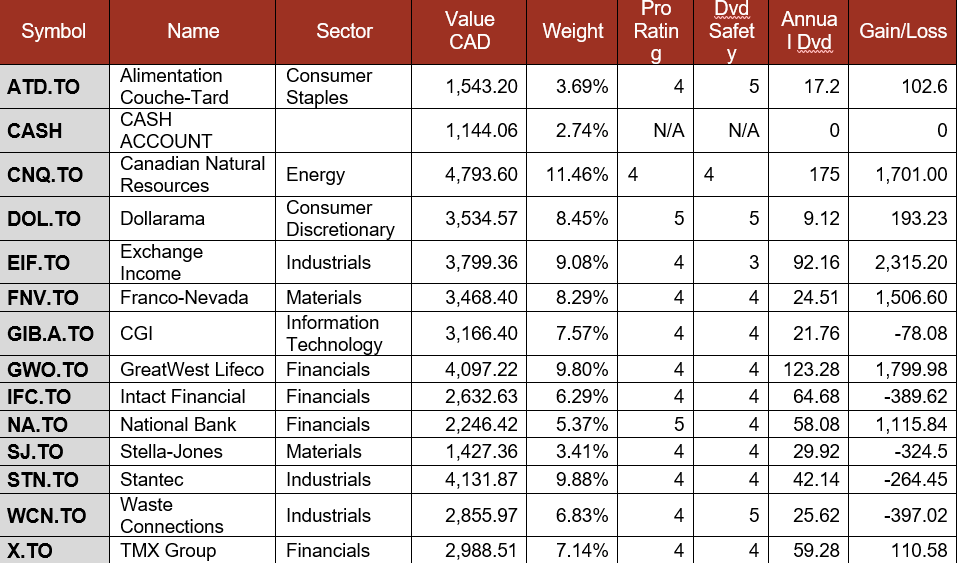
Here’s my SM portfolio summary as of October 8th, 2026 (before the bell):
I Will Buy More Franco-Nevada
Franco-Nevada is among the smallest positions I own (1%), and I want to build it into a full position (3%). It will take time, but I want to grow my exposure to FNV going forward. The point is to have a more balanced portfolio. I can start by adding $1,000 more here and there.
I haven’t deployed my $1,000 this month, but it will go into FNV for sure!
Pension Portfolio Summary
Here’s my pension plan portfolio summary as of October 8th, 2026 (before the bell):
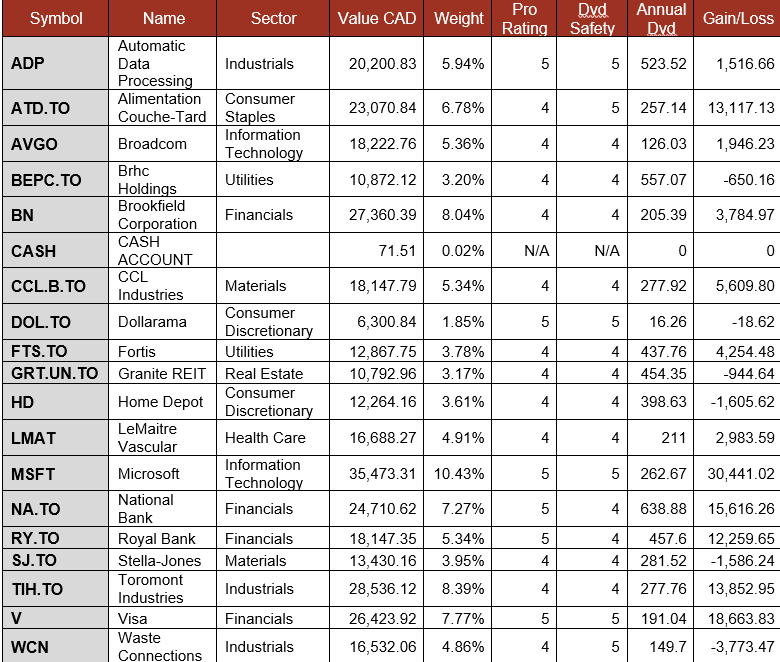
Total value: $340,113.76 (+$518.64, +0.15% from September).
My Entire Portfolio Updated for Q3 2026
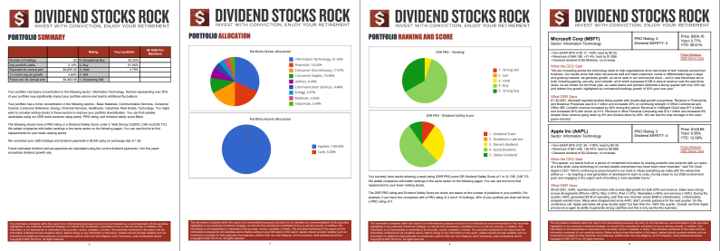
Each quarter we run an exclusive report for Dividend Stocks Rock (DSR) members who subscribe to our very special additional service called DSR PRO. The PRO report includes a summary of each company’s earnings report for the period. We have been doing this for an entire year now, and I wanted to share my own DSR PRO report for this portfolio. You can download the full PDF showing all the information on my holdings. Results have been updated as of October 8th, 2026. The next quarterly report will be available in January.
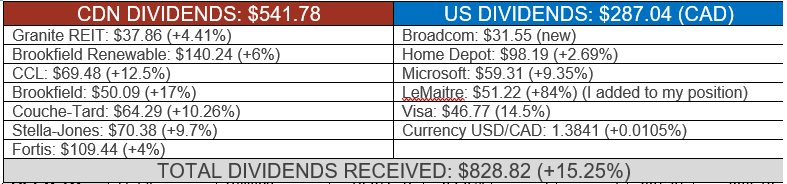
Dividend Income: $828.32 (+15.25% VS. September 2025)
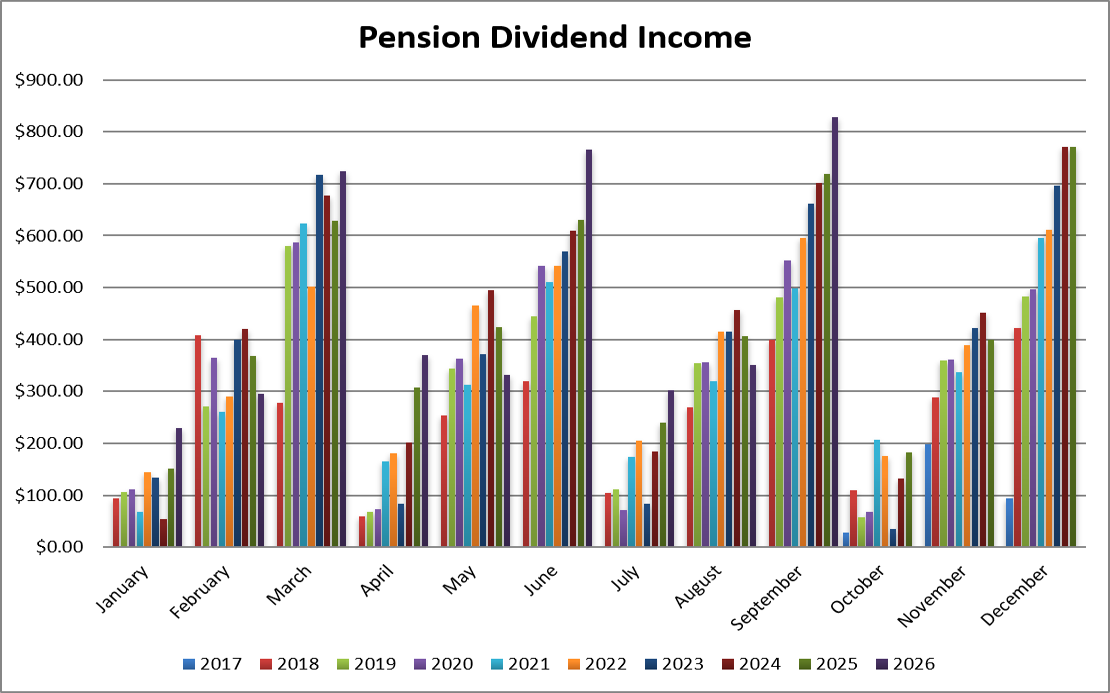
The dividend is larger this month because I added more shares of LeMaitre, I added Broadcom to my portfolio and all companies increased their dividends vs. last year (many double-digit increases!).
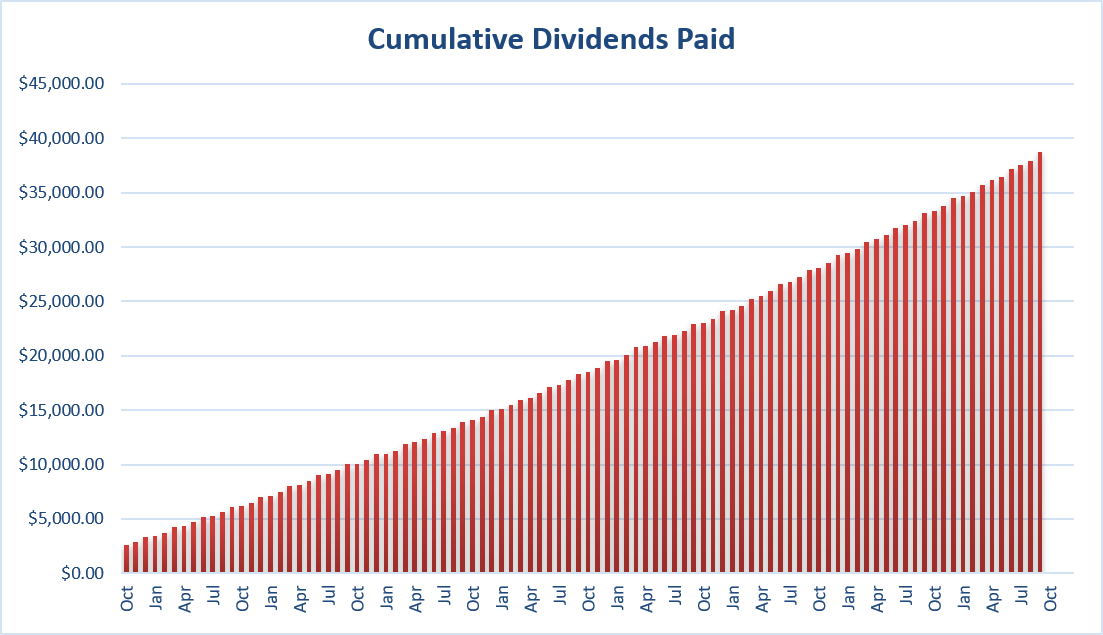
Since I started this portfolio in September 2017, I have received a total of $38,693.08 CAD in dividends. Keep in mind that this is a “pure dividend growth portfolio” as no capital can be added to this account other than retained and/or reinvested dividends. Therefore, all dividend growth is coming from the stocks and not from any additional capital being added to the account.
Final Thoughts
I have started taking notes on what to look at for my year-end review. I’ll share my process in a workshop in December or early in January. The current economic situation calls for a good review that goes beyond current numbers.
I think it makes sense to position our portfolios to protect ourselves against a potential bear market and to thrive once we get past the storm.
Cheers,
Mike.







Leave a Reply