
Income is one of the most powerful words in investing.
Say “growth,” and some investors get excited. Say “value,” and others nod politely. But say “income,” and everybody pays attention.
I get it.
The whole point of investing is not to die with the biggest portfolio possible. At some point, your money must start working for you. It must generate cash flow. It must help you pay the bills. It must replace your paycheck.
That’s exactly why we now have so many income ETFs.
They promise simplicity. They promise regular distributions. They promise retirement income without too much thinking, managing, or tinkering. For investors who want less complexity and more cash flow, it sounds like the perfect recipe.
But there’s a trap hidden in that promise.
Too many investors focus on the distribution and forget to ask what makes that distribution possible. They put the yield ahead of the strategy. They chase the paycheck and ignore the engine behind it.
That’s how you end up buying products that feel good on paper but don’t necessarily make your retirement plan stronger.
Before you buy any income ETF, you must understand why these products exist, what problem they solve, and where the good ones stop being useful and start becoming marketing.
Why do we have so many income ETFs?
The first reason is simple: investors want to live off their portfolio.
That’s not complicated. If you have spent years or decades building wealth, you eventually want your portfolio to send money back your way. If someone tells you that your investments can generate 4%, 5%, or 6% income and show up regularly in your account, that will naturally catch your attention. The appeal is obvious because it feels like retirement is finally becoming real.
If you have $1 million invested and it generates 5%, you picture $50,000 a year showing up like a paycheck. You don’t have to think about selling shares. You don’t have to care as much about market fluctuations. You just collect the income and enjoy the fruits of your labor.
At least, that’s the story investors tell themselves.
Income also fits into a world people already understand. When you work, you receive a paycheck. When you retire, you want your portfolio to replace that paycheck. That’s why monthly distributions are so popular. Some products even go further by paying more frequently, because firms know investors love the feeling of seeing cash land in their accounts. It creates comfort. It creates familiarity. It even gives a little dopamine hit each time a payment comes in.
But let’s stop for a second.
A paycheck isn’t guaranteed. A dividend isn’t guaranteed. A distribution isn’t guaranteed.
In every case, the income only exists if the business or assets behind it are generating enough return to support it. A job can be lost. A dividend can be cut. A distribution can be reduced. That is why I always come back to the same principle: income is only as good as the total return supporting it.
The second reason we have so many income ETFs is convenience.
Many investors are not interested in building and managing a portfolio of individual stocks. They don’t want to review earnings reports, follow sectors, or decide when to sell a position. They want simplicity. Pick a fund, click buy, collect the distributions, move on.
And honestly, that part makes sense.
As you age, convenience becomes more valuable. At some point, many investors would gladly trade a bit of control for a simpler structure. There is nothing wrong with that. ETFs can absolutely help reduce portfolio complexity.
The danger comes when simplicity becomes an excuse to ignore quality.
If your only question is, “How much does it yield?” then you are no longer building an investment strategy. You are shopping for a product. And investment firms know exactly how to sell those.
The classic solution: dividend-focused ETFs
If you want a simpler portfolio while keeping one foot firmly planted in the world of dividend investing, dividend-focused ETFs are the classic answer.
They’ve been around for a long time. They are easy to understand. They don’t rely on fancy structures or seductive gimmicks. At their best, they simply hold baskets of dividend-paying companies and turn them into a one-ticket solution for investors seeking income and diversification in a single package.
That doesn’t mean I suddenly prefer ETFs over stocks.
I still want to know what I own and why I own it. I like controlling my sector allocation. I like choosing the companies that fit my strategy. I don’t enjoy paying fees for something I can often do better myself. And if I dig into almost any ETF, I usually find names I wouldn’t want in my own portfolio. That makes conviction harder.
But I’m also realistic.
For many investors, dividend ETFs are a perfectly reasonable solution. They simplify portfolio management, they reduce the number of decisions you have to make, and some of them are built around exactly the kind of companies I want to own anyway.
That’s where the nuance begins.
Not all dividend ETFs are created equal.
Some are built for dividend growth. Others are built for a higher starting yield. Some are well diversified. Others are little more than concentrated country or sector bets wearing an ETF label.
Let’s look at a few examples.
VIG: the closest thing to a DSR-style ETF
If you are looking for an ETF that feels the most aligned with a dividend growth mindset, Vanguard Dividend Appreciation ETF (VIG) is probably the cleanest example.
This fund is not built for yield chasers. Its yield sits around 1.55%, which will not impress investors who only care about immediate income. But that is exactly why the structure makes sense. VIG focuses on quality companies with a track record of dividend growth. It tilts toward large-cap names and puts more weight in sectors like technology, financials, healthcare, and industrials.
In other words, this is not a product trying to manufacture income. It is a product built around strong businesses.
That’s a big difference.
As of Dec 31, 2025, it held about 338 stocks and it tilts toward quality large caps, with heavier exposure to information technology (27%), financials (21%), healthcare (16%), and industrial (11%).
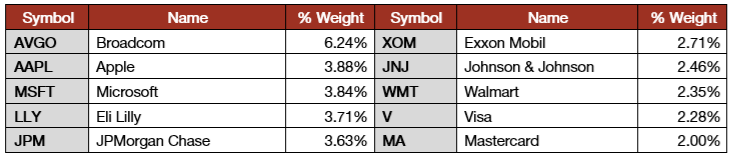
If your objective is to own durable companies that can keep growing earnings and dividends over time, then VIG deserves respect. It follows a much more yield-agnostic approach. You are not buying a fat yield today. You are buying quality and long-term dividend growth potential.
For investors who understand that wealth is built through business growth first and income second, VIG makes a lot of sense.
VYM: more yield, still grounded in reality
The Vanguard High Dividend Yield ETF (VYM) takes one step closer to the income crowd, but without going overboard.
Its yield was around 2.34%, which is higher than VIG, though not exactly what I would call “high yield.” That is almost ironic given the name. Still, that tells you something useful right away: this fund is not stretching into dangerous territory just to look attractive. It remains a broadly diversified ETF built around established dividend payers.
VYM spreads its exposure across many sectors and holds hundreds of stocks. You will find many familiar names in the portfolio, including several businesses that dividend growth investors already know and respect. That is why I view it as a reasonable middle ground for investors who want a bit more yield today without completely abandoning quality.
It’s diversified by name count (~560 stocks) and spreads across the market’s classic dividend payers. Sector exposure is led by Financials (21%) with meaningful weights in Technology (13%), Industrials (14%), and Health Care (12.55%), and it explicitly excludes REITs in the benchmark design.

The main trade-off is that the dividend growth profile is less clean than VIG. The distributions do rise over time, but not in a smooth, predictable pattern. That is normal for broad ETFs because the fund is simply passing through dividends received from many different companies with different schedules and growth rates.
Still, if your goal is simplicity and a respectable yield, VYM is easy to understand and easy to justify.
I also made a complete review of Vanguard Retirement Income ETF (VRIF) in this video:
SCHD: where yield and dividend growth meet
If you want one ETF that tends to make income investors happy without forcing them into absurd yield territory, Schwab U.S. Dividend Equity ETF (SCHD) is usually the one that gets the spotlight.
And I can see why.
When doing my research, SCHD showed a yield of around 3.40%, which is noticeably higher than VIG and VYM, but it also posted a stronger distribution growth profile over the past decade than VYM. That’s a rare combination. Usually, when you push yield higher, you sacrifice some growth quality. SCHD has managed to offer a more balanced profile.
Of course, you don’t get that for free.
SCHD is more concentrated than VYM. It owns fewer stocks and leans harder into certain sectors. That means you are taking on more concentration risk in exchange for a better blend of yield and growth.
But at least the trade-off is understandable.
This is still a dividend ETF built around actual companies with profitability and dividend discipline. It is not a product trying to impress you with an eye-popping yield while quietly weakening your long-term return.
Sector weights are led by energy (21%), consumer defensive (18.5%), healthcare (16%), and industrial (11.50%). The stock allocation is more equally weighted than with VYM due to the smaller number of stocks.

For investors seeking a one-ticket U.S. dividend ETF and a more generous starting income, SCHD is one of the stronger options.
Why I’m much less excited about Canadian dividend ETFs
Now comes the part where I become more skeptical.
Canadian dividend ETFs often look attractive because their yields are higher. That is enough to pull in a lot of investors right away. But once you look under the hood, the structure becomes far less exciting.
Funds like VDY, XDIV, and XEI are not really as diversified as many investors imagine. They are mostly concentrated in the same sectors: financials, energy, pipelines, and utilities. In some cases, the top holdings dominate the fund to a point where you may wonder why you’re paying a fee at all.
That is my issue with many Canadian dividend ETFs.
It’s not that they own bad companies. In fact, they often own very solid Canadian blue chips. The problem is that they package the obvious and charge you for it. If you have followed the Canadian market for a while, you already know what the recipe looks like: big banks, large insurers, pipelines, one or two utilities, maybe an energy giant or two, and there you go.
That is not exactly deep portfolio engineering.
The higher yield may look attractive at first, but the dividend growth profile is often weaker than on the U.S. side. The concentration risk is also much higher. So yes, you may collect more income today, but you are often doing so with a less balanced, less flexible structure.
That is why I usually feel investors get a better deal with U.S. dividend ETFs.
With Canadian ones, I keep coming back to the same question: why pay fees to buy the obvious?
The question that matters more than yield
The real problem with income ETFs is not that they exist. The real problem is that investors too often buy them for the wrong reason.
If you use a dividend ETF because it simplifies your life, gives you exposure to quality businesses, and fits inside a broader retirement strategy, that can make perfect sense. If the ETF helps you reduce complexity without sacrificing too much quality, then it is doing its job.
But if you buy an ETF because the yield looks attractive and you hope the rest will take care of itself, that is where mistakes begin.
Income is not the strategy.
Income is the outcome of a strategy that works.
That’s why the first question should never be, “How much does it pay?”
The first question should be, “What does it own, how does it generate return, and can this structure support income over time?”
That mindset changes everything.
It moves you away from product shopping and back toward investment thinking. It forces you to analyze the engine rather than just admire the dashboard. And in retirement, that difference matters a lot more than one extra percentage point of yield.
Own quality first. Then let the income follow.
Download the Dividend Income for Life Guide to learn how to build income that can last through bull markets, bear markets, and everything in between.







Leave a Reply